Blue Molvi
- Amna Qamar

- Feb 3, 2023
- 5 min read
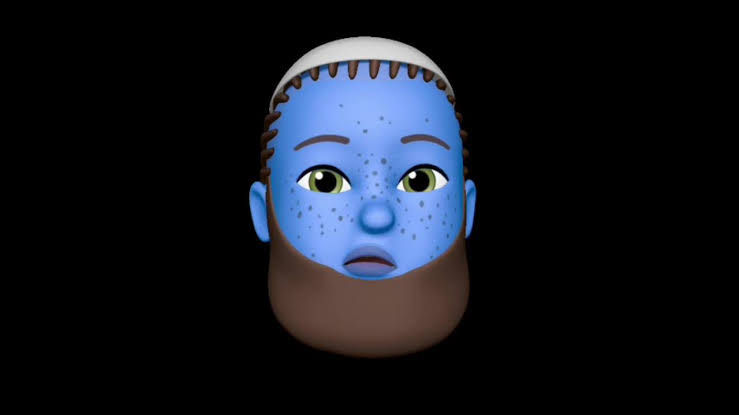
The term ‘molvi’ immediately creates a physical and conceptual picture in our minds. The long beard, ‘tazbi’, white clothes, and ‘topi’ are the signifiers while the meanings/thoughts derived from each such as ‘safe’, ‘truthful’, ‘pure’, and ‘helpful’ people would be the signified meaning for each individual relating to his/her experiences. Islam encourages children should read the Quran at an early age and as per culture/society, they are put into ‘madrassas’ or left in the safe hands of a molvi invited to their house. Most of us have had first-hand experiences with them which either created an image, added to, or destroyed it further.

The symbol of a ‘molvi’ and his attire has been formed by cultural intervention over a long period. It holds various meanings for different cultures. Pakistanis with beards, for instance, are considered dangerous in foreign countries. For some societies, a beard is ‘fashion’ where men usually have long stubbles to portray artistic expression and freedom, etc. Ghulam Farooq, a journalist, says that in the 1950s no self-respecting man would be seen with a beard except molvis as it was seen as a symbol of exploitation. He also added that some members of Islami Jamiat Taleba (IJT) were also clean-shaven. Similarly, ‘topi’ is often worn by revolutionary leaders worldwide or just to protect oneself from the sun. These physical elements don’t substitute for a person’s poor character. These are ‘’visual proxies of an individual’s religiosity but Pakistanis tend to transform these external markers into a religious stock market, where your shares trade up or down based on the length of your beard on a particular day’’. The easier dissemination of knowledge via the internet has created a stereotypical image of religion in public life. ‘Blue molvi’ a character from Swineryy’s Instagram page now becomes a universal molvi that teaches/revises our religious knowledge and also interacts with the masses by making videos.
In ‘‘2020 vision’’, https://www.instagram.com/p/B6vx9C5H_Ys/?igshid=MWI4MTIyMDE= uploaded on 31/12/19, Blue Molvi talks about how we are Muslims by name and our identity/respect is based on women alone. He comments on how girls party/go to a disco on New year and wear western clothing which doesn’t align with the meaning of revelation ‘here’. Molvi’s favorite topic is women at all times where they talk about how they should dress modestly as they are the root cause of evil in a man’s life. He targets girls while disregarding the fact that there are boys as well in the party. It is interesting to note how the term ‘disco’ was used for a molvi when Sunni/Barelvi religious members were seen indulging in dance. ‘Disco molvi’ was coined in the late ’70s when Jamaat-e-Islami members would listen to pop music and have girlfriends. This also reminds me of the Pakistani movie ‘Bol’ where Hakeem sahib (molvi) engages in extramarital affairs and goes to ‘mujra’ to enjoy while being very strict with his household women and making their life miserable.

In ‘’Bottoms up’’, https://www.instagram.com/p/CCbrC6spPwT/?igshid=MWI4MTIyMDE= uploaded on 10/ 7/20, he uses the word ‘harami’ casually which negates our belief that saying swear words is haram. He reveals that molvis are knowledgeable of every ongoing illogical activity (sab pata hai mujhey.). Therefore, it is an indirect hint that they may also indulge in it since we humans have more awareness regarding our areas of interest. The wink at the end also strengthens this idea. Molvi Tahir Ashrafi had given an interview while drunk (he was slurring words and had difficulty concentrating). Sharmeen Obaid on this said: “What an interesting clip feat Maulana Ashrafi worth watching 2 understand #maulvis in #pakistan double standards. In 1969, Molana Kausar Niazi left IJT to join the PPP party where he was called ‘Maulana Whiskey’ because he would either be drunk or surrounded by dancers. For me, this created a picture of Bollywood songs where men on ‘takhat’ enjoy women dancing but then this time we picture a molvi gawking at women for pleasure. There is a different relationship dynamic that exists between teachers and students where respect/tone/mannerisms are maintained. However, ‘blue molvi’ becomes our acquaintance/friend or someone like us. He abides by the imperfect image of a molvi and like any other also provides his justifications to suit himself. Furthermore, he humorously points out how PIA Airline refers to ‘pi aye ye (go drink) when in reality more than 20kg (44lb) of heroin was seized at the Pakistani office in Islamabad (22 May).
‘’The public eye. Part 1’’,https://www.instagram.com/p/B8jAN5bH6u7/?igshid=MWI4MTIyMDE= uploaded 14th February 2020, says that ‘pyar’ is PR (public relation) when there shouldn’t be any relation in public. He doesn’t mention private relations hence hinting that pyar is allowed in secrecy. We see some molvis have even been implementing it. Qandeel Baloch, an internet celebrity, posted pictures with Molvi Qawi who is known for his misogynistic stance on women. It poses the questions of the activity and intention of two individuals. Furthermore, ‘blue molvi’ also says that he chooses to beat to make his word understood. A video was put up where we saw Molvi Mufti Aziz ur Rehman’s video of molesting his student. He said he was sexually harassed and blackmailed every Friday for three years. When he went to the madrassa administration, they refused to believe him citing that the molvi was a pious man. The newspapers are filled with examples of abuse of children by molvis. A child was whipped regularly because of which he lost faith forever and even after growing up he told his children that there is no God.
Thereby, ‘’Blue molvi’’ addresses the behaviors/concerns of molvis today by successfully using symbolism/humor/exaggeration. I feel that this character fits well with people of our age group who understand the puns and are more liberal, however, our parents for instance might look at it as an insult and find no humor in it. Therefore, the signified meaning in semiotic analysis changes according to gender, age, etc.
Bibliography:
Boheim, Amna, ‘’My understanding of my father changed when I learnt he was abused as a child by a maulvi sahib,’’ Dawn, December 26, 2017.
https://www.dawn.com/news/1378955
Bokhari, Haiya , ‘’ A meeting between Qandeel Baloch and Mufti Abdul Qawi is a win for the voyeuristic star,’’ The News, 2016. https://www.thenews.com.pk/magazine/instep-today/129621-A-meeting-between-Qandeel-Baloch-and-Mufti-Abdul-Qawi-is-a-win-for-the-voyeuristic-star
Jaffri, Farhan, ‘’What really happens inside a madrassa,’’ The Express: Tribune, December 10, 2011. https://tribune.com.pk/article/8983/what-really-happens-inside-a-madrassa
Khan, M Ilyas, ‘’Is heroin being smuggled on Pakistani planes into Heathrow?’’ BBC news Islamabad, 25 May 2017. https://www.bbc.com/news/world-asia-40016761
Lakhani, M Bilal, ‘’A disco maulvi and liberal fascist go for sheesha,’’ The express: Tribune, March 23, 2016. https://tribune.com.pk/story/1071362/a-disco-maulvi-and-liberal-fascist-go-for-sheesha
Nettikkara, Samiha, ‘’ #BBCtrending: Pakistani cleric accused by opponents of being 'drunk',’’ BBC, October 18, 2014. https://www.bbc.com/news/blogs-trending-29661340
Paracha, Nadeem F., ‘’Maulana who?,’’ Dawn, October 13, 2011. https://www.dawn.com/news/665959/maulana-who


Comments